Showing posts with label Shahab Bachani. Show all posts

Thursday, September 1, 2011

Nestle to stand trial in Quezon City for anti-competitive acts

In light of all the debates and discussions on anti-trust practices revolving around the PLDT-Smart-Sun deal, another giant multinational, Nestle Philippines, Inc. (NPI) is actually going to be held for trial for criminal violation of anti-competition provisions.

On 15 August 2011, the Office of the City Prosecutor of Quezon City issued a resolution finding that there is sufficient evidence to hold NPI for trial for violation of Article 186 of the Revised Penal Code, which penalizes any person who shall enter into any contract or agreement, or shall take part in any conspiracy or combination in the form of a trust or otherwise, which results in restraint of trade or commerce and prevents by artificial means free competition in the market. 

High-ranking officers of NPI, namely Doreswamy Nandkishore (former CEO), John Martin Miller (current CEO), Shahab Bachani and Peter Noszek were impleaded for conspiring to commit anti-competitive acts.   The resolution found that NPI’s practice of resale price maintenance constituted price-fixing which results in exclusion of competition in a particular market. 

Since current anti-trust bills are still pending in Senate, the OCP made reference to the US Sherman Act which considers resale price maintenance as illegal per se.   According to the resolution, the vertical agreement existing between NPI and its distributors, FDI Forefront II Trading Corporation and Service Edge Distributors, Inc., was anti-competitive since Nestle fixed the resale price of its products, while its distributors were obligated to sell Nestle products only at the price fixed by NPI.   Apparently, failure by the distributors to sell the products at the prices fixed by NPI would result in the unilateral termination of their distributorship agreement by NPI.   The price fixing was found to be harmful to consumers because it meant that consumers cannot buy the product at a lower price than that fixed by NPI.

This practice of price-fixing by NPI was deemed as a violation of Paragraph 1 of Article 186 of the Revised Penal Code.   Nandkishore, Miller, Bachani and Noszek were found to have knowingly committed the crime or to have permitted or failed to prevent the commission of the crime.   The NPI officers will stand trial before a Regional Trial Court of Quezon City.

Wednesday, June 29, 2011

Nestle execs in Manila


"Spiced, not iced tea?"

by Willie Baun
Published 28 June 2011 in STREETLIGHTS, People's Journal
(Original article available online here)

"ALRIGHT, intractable six-cup Nescafe Joe warns, just as long as you don’t dunk bad news in my coffee mug; I say consider the caveat seconded.

With the hot and humid spell of summer blown off by the typhoon season, expect a drought of sorts in the market for soft drinks, juices, halo-halo and, oh yeah, iced tea. 

However, Nestle Philippines, Inc. executives John Miller, Shahab Bachani, and Nandu Nandkishore may well pick up the downer, as it were, while having to drink gallons of iced Nestea to cool off. 

The NPI triumvirate company and personal legal problems that, for sure, somehow dampened the recent celebration of the global Swiss firm’s 100 years in the Philippines. 

Perjury charges have been filed against them in the Makati and Quezon regional trial courts. Complainant in the case is no smalltime outfit that NPI can ignore, let alone mess with.

The plaintiff is Banco de Oro, which just happens to be owned by Forbes Magazine’s top Filipino billionaire – mall magnate Henry Sy, owner of the ubiquitous SM malls.

BdO’s issue with NPI is its alleged failure to divulge prior knowledge of the financial woes of an NPI-favored distributor, who kept getting bank loans on the strength of the endorsements by aforementioned NPI execs. 

Some NPI distributors have also complained to the Department of Trade and Industry and taken legal action against the firm’s bully tactics – alleged instances of predatory pricing that sacrificed their profitability to the goal of booting rival brands out of contention. 

Shouldn’t pouring when it rains be bad enough for NPI? I’m inclined to agree if only for the Nescafe aroma that delights me as I write. But then again there’s simply more! 

This refers to the long-festering labor dispute in the NPI plant in Cabuyao, Laguna where more than 600 employees had gone on strike nine years ago to compel management to the bargaining table and discuss wages and benefits. 

The company purportedly simply turned a deaf ear to the worker’s plaints, allegedly to this date, has all but disregarded the Supreme Court’s decision in 2006, ordering NPI to reinstate the strikers and initiate formal negotiations. 

In the meantime, some of the strikers have reportedly been killed mysteriously, notably union leader Melito Roxas and his successor Diosdado Fortuna. 

Perhaps Mssrs. Miller, Bachani, and Nandkishore would care to share their iced tea with those who feel they’ve been mistreated by their company for the longest time. Or should it be spiced tea to ensure the complainants just grin and bear it?"

Wednesday, March 2, 2011

Anti-trust bills timely

"Anti-trust bills timely"
by Willie S. Baun
Originally published in People's Journal, 01 February 2011, STREETLIGHTS, p. 4

"Multinational companies, particularly those dealing in "fast-moving goods," have enjoyed an array of privileges that otherwise would not be available to them, not even in their own countries.

What makes the FMCGs so profitable in the domestic market, apart from the usual bias for the "imported," is the participation of local distributors.

Numerous small enterprises take on the difficult job of bringing the FMCGs to the buying public, and set their profit margins based on standard retail prices and bulk-discount costs.

In effect the MNC plays commissary that merely takes care of administrative matters but somehow gets the lion's share of the income earned by the distributors.

'In and of itself,' observed a trade official, 'this is already a rather one-sided business deal.' It was added when flagrantly abused by a giant MNC to the graver prejudice of the distributors - the alarm bells should ring against anti-trust.

Two distributors in particular claim to have fallen under the mercy of one such MNC due to its alleged predatory pricing in direct conflict with the corporate codes enforced by the Department of Trade and Industry.

As this case wider currency in business circles, so has "Anti-Trust" attained buzzword standing. Soon enough, I believe, Senate President Juan Ponce Enrile and Sen. Miriam Defensor-Santiago would be asked to include FMCG distributors and other such outsource companies in appropriate bills they have proposed.

Legal proceedings between the MNC and the distributors showed the multi-national may have perjured. That, moreover, the MNC's counter-affidavits and joint counter-affidavits versus the predatory pricing charge are inconsistent with one another and with the facts of the matter at bar.

When their attention was reportedly called, the MNC executives seemed unmindful of the resulting perjury charges. 'Their rebuttals were at best amusing, and, at worst dismissive. Yeah, as in 'we didn't know or realize we were lying!''

They also posited that 'privilege' and 'right' were synonymous and took issue with the distributors for the focusing on semantics. Cited in the MNC's defense, the Webster's Encyclopedic Dictionary defined 'privilege' as a 'right, immunity, or exemption only by a person beyond the advantages of the most.'

On the other hand, Black's Law Dictionary, the authority on legal terms and legal definitions, indicates 'privilege' as a 'particular and peculiar benefit or advantage enjoyed by a person, company, class, beyond the common advantages of other citizens.'

Common sense, of course, tells us that a right is inherent while a privilege is bestowed. Then again, there's no guarantee that common sense is precisely what it says it is.

In any case, here's Mr. Webster just once more; Anti-trust, adj., Pertaining to the regulation of or opposition to trusts, cartels, pools, monopolies, and other organizations and practices in restraint of trade.

So there, Jose, and trust JPE and Miriam to get it right all the way."

Monday, February 28, 2011

Tuesday, January 26, 2010

On Apparent Authority for Cebu Pacific and Nestle Philippines: Repost from Emil Jurado, Manila Standard January 26 2010


After making headlines for more than a week, the news item about two children with special needs and their mothers who were forced to disembark from a Cebu Pacific plane is quieting down.

The story had all the ingredients of a perfect storm. It drew the kind of attention that it deserved. More than basic consumer rights, it touched on human rights, especially the rights of children.

Not surprisingly, various groups scored Cebu Pacific for its discriminatory actions. But what surprised me was the airline’s reaction to the scandal. It would have been so easy for the airline to put the entire blame on the erring employees—the Filipino colloquial term “laglag” being the perfect word to describe the action. They could have had a team of lawyers and spokesperson to mouth the worn-out argument that the individual actions and lapses in judgment of our staff cannot be held against the company. But they chose not to. Cebu Pacific actually owned up to its employees’ fault, apologized for it, and took conciliatory measures.

At least, some companies understand the legal principle of apparent authority as a rule that applies to situations such as the Cebu Pacific gaffe. Apparent authority states that a principal is responsible for the acts of its agents.

***

Sad to say, some firms cannot seem to grasp this concept of apparent authority either out of ignorance or malice. Recently, a hornet’s nest the size of Switzerland was stirred when a top multinational was assailed by its Central Luzon distributors for failing to prevent a billion-peso scam perpetrated by one of its high-ranking officials.

My gulay, what makes matters worse is that the architect of the foul scheme seems to have operated in plain sight, acting in her capacity as the regional sales manager of the multinational.

This manager allegedly instructed her distributors to give preferential discounts to the tune of 12-percent in favor of one particular reseller, Company X. The distributors were stumped on how they could possibly do that, since the maximum discount they could give was only 4-percent. Not to worry, the manager said, who wrote them letters using the company’s letterhead, promising that the multinational would cover the difference. And since the manager was a well-decorated and high-ranking employee, they complied.

Company X’s goods now acquired at an illogically cheap rate, all it had to do was go to a consumer area in Metro Manila and undersell all other distributors. Pretty soon, retail outlets were almost exclusively ordering from Company X at the expense of other Metro Manila distributors. Santa Banana, don’t forget that all these distributors were supposedly part of the same team!

The Metro Manila and Central Luzon distributors felt antsy. The multinational refused to investigate, and after months of reassurances, not a single centavo of discount reimbursements came.

***

They say hindsight is 100-percent accurate, but even the smallest of due diligence could have prevented the financial collapse of countless distributors.

My gulay, didn’t the multinational wonder how a previously-unheard of reseller could have come to Metro Manila and taken royal customers away from existing distributors? Based on figures submitted, didn’t the multinational question how a company could sell items for so low?

Ultimately, I feel that it is the legal principle of apparent authority that will put the case to rest. Even if the manager acted on her own as claimed, the law doesn’t favor the cop-out (palusot). The distributors are set to file a class-action against the multinational, where the buck should stop.

Monday, January 25, 2010

Lessons from Rosa Henson and Japan: Hey Nestle Philippines, Read This!

A lot of us may have forgotten already but in 1992, when Rosa Henson was already 65 years old, she announced to everyone her World War II experience – known only by two people she held dear –her mother and deceased husband. She was a wartime prostitute by the Japanese Imperial Army. She was a Comfort Woman.

Her public statements gave more than two hundred other Filipinas and countless others in China and Korea to have the courage and come out in the open to say that indeed they were kidnapped, raped and forced to be prostitutes of the Japanese military.

Their plight, as a wartime Japanese soldier described, “The women cried out, but it didn't matter to us whether the women lived or died. We were the emperor's soldiers. Whether in military brothels or in the villages, we raped without reluctance."

One of the women, when she testified in US Congress said, "Many stories have been told about the horrors, brutalities, suffering and starvation of women in Japanese prison camps. But one story was never told, the most shameful story of the worst human rights abuse committed by the Japanese during World War II: The story of the “Comfort Women”, the jugun ianfu, and how these women were forcibly seized against their will, to provide sexual services for the Japanese Imperial Army. In the so-called “Comfort Station” I was systematically beaten and raped day and night. Even the Japanese doctor raped me each time he visited the brothel to examine us for venereal disease."

The Japanese government, immediately after the war, destroyed all documents referring to their creation of their own sex-slave industry and up to 1990 said that it had nothing to do with creation of “Comfort Stations”, insisting that either they do not exist (there was no written evidence according to them!) or if they did, they were run by small scale private enterprise.

In spite of Japan’s statements, the United Nations conducted their own research of what had happened and discovered through a series of eyewitness investigations that indeed the then Japanese government systemically created the “Comfort Stations” in response to the request of their military to keep up the morale of their troops.

Japan, eventually relented and finally admitted their systemic fault for the creation of these brothels during the war.

Rosa Henson died in 1997 but not before she received Japan’s formal apology and getting the atonement recompense.

I was not there when she passed away but I can imagine that she did so in peace.

***

There are several comments close to home that come to mind after reading the above:

Does the existence of an incident depend on the availability of written evidence? Apparently, Japan – the third biggest economy in the world – thought so. Hmmm. Sounds familiar.

Japan is one of the most progressive countries and has actually given a lot aid, economic and otherwise, to a lot of third world countries especially after the war. Do their current actions absolve them of the prostitution atrocities they committed in the past? Hmmm. Sounds familiar again.

It doesn't take a genius to know what the answers are. Unfortunately, there are really idiots and morons around especially in THAT company. Tsk, tsk.

Thursday, January 14, 2010

NESTLE PHILIPPINES: SHAME ON YOU! - Repost from Ducky Paredes, Malaya, January 14 2009

A Battle of Dragons

’Apparent Authority’ is a term used in the law of agency to describe a situation in which a principal leads a third party to believe that an agent has authority to bind the principal, even where the agent lacks the actual authority to do so.

by Ducky Paredes

In the Chinese calendar, 2010 is the year of the metal tiger, when we should focus on certain character traits that will ensure prosperity and success for the whole year round. The qualities associated with the metal tiger are persistence, strength, and determination.

These are what friends who have gotten a raw deal at the hands of a contentious multinational need to eventually get their due.

You all know this company by now — it manufactures and markets a wide range of mass consumer products and, I’ve written about these problems several times.

Apparently, finally, after years of enduring abuse at the hands of this multinational, a number of its Central Luzon distributors have organized themselves and are now poised to fight back. Perhaps the year of the metal tiger has finally inspired them to stand up against a supposed corporate bully — a “Crouching Tiger”, ready to pounce on its tormentor and defend itself.

Based on reports, the last straw for these outraged – and mostly debt-ridden – distributors came when an internal scandal broke out that caused them to lose tens of millions of pesos individually. Unfortunately, after repeated attempts to air their grievances to the multinational, the response they got has allegedly been the formal equivalent of a shrug and an eye-roll.

Their troubles s began when the multinational’s Regional Sales Manager (RSM) for Central Luzon instructed her distributors to give an unheard-of discount (purportedly 10% to 12%) to one particular company. Since distributors are only allotted a 4% discount, some questioned how they could possibly still stay in business, losing 6% to 8% at each transaction. (A funny supposedly Chinese quote is: “Hindi bale malugi sa bawat benta basta kita sa lahat.”)

The answer to their conundrum came when Ms. RSM allegedly wrote them letters – using the multinational’s official letterhead, no less – promising that the multinational would definitely reimburse the difference. Given this directive and the document to back it up, the Central Luzon distributors had to comply.

The extremely fortunate recipient of these massive discounts was now in a position where it can undersell all other distributors, which it did, except those in Central Luzon, from where its cheap goods were coming. This privileged company apparently did just that, targeting Metro Manila wholesalers. Eventually, the multinational’s Metro Manila distributors began crying foul, wondering how a distributor from another area could possibly be selling the goods at such low prices. When they asked company officials to explain this puzzle, the multinational’s clarification supposedly went something like this: “I don’t know how that company does it, all I know is that they are able to do it. If your sales are suffering because you can’t find a way to match their price, then that’s your problem, not ours”.

Because of this, and faced with an illogical situation, a number of Metro Manila distributors had to absorb their losses; the smarter ones stopped dealing with this multinational

Meanwhile, over at Central Luzon, things began heating up when not a single distributor received the promised reimbursements from the mother company. This reached a bitter climax when the checks issued by the discount-privileged customer even started to bounce. Lo and behold – upon further investigation, it was discovered that the person running the company was the husband of Ms. RSM! Can you say “conflict of interest”?

Adding insult to injury (or lawsuit to malice) was the fact the checks that bounced were under the bank account of Ms. RSM herself.

At present, Ms. RSM is nowhere to be found, and is presumably in hiding with her husband. In their wake, they left behind total losses (from both Central Luzon and Metro Manila distributors) reportedly amounting to approximately P1 billion. More tangibly, hundreds of jobs and financial futures were ruined because of this purported scam.

The multinational – let’s call this the “hidden dragon” because of the way it presents itself as a family-oriented, wholesome company while, in reality, practically a criminal enterprise – seems to have washed its hands of the situation. Perhaps what they don’t realize is that under the legal principle of “Apparent Authority”, this multi may be in a real bind.

“Apparent Authority” is a term used in the law of agency to describe a situation in which a principal leads a third party to believe that an agent has authority to bind the principal, even where the agent lacks the actual authority to do so. In such circumstances, the law holds the principal liable for the acts of the agent, out of fairness to the third party.

Considering that the multinational had every chance (and the obligation to do so, since the RSM was apparently up to no good and it was the multinational’s duty to stop her) to correct the anomaly during its early stages (but instead chose to pursue their sales targets), this “hidden dragon” may soon be forced out of its cave and tamed in a court of law.

Hopefully.


Thursday, December 24, 2009

Anti-Trust


I don't particularly like Senator Miriam but I think she's the only senator with balls (yup, a she-male!) to finally push a law that prevents abuses by giant corporations such as PLDT, JG Summit, SM, Nestle (Sorry I had to mention it.) This law has been pending for years now and the corporations actively lobby against it because it will definitely clip their wings!

Anti-trust law. No more abuses. Filipino SME's and consumers protected. No more bad service or coffee. I say this with a lot of hesitation but, GO MIRIAM!


The Real Life Soap (or shall I say, Coffee) Opera as written by Yutani Weyland (http://yutaniweyland.blogspot.com)

Monday, December 21, 2009

Nestle Philippines: Good scheming for a good life


Nice tag line. You can bet that they mean it in every sense of the words.
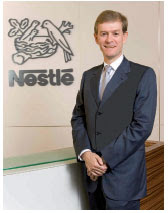

From 2003 to 2007, a distribution company operating in the Northern Quezon City area was illegally terminated for its services by Nestle Philippines, Inc.

Here is an overview of what is happening now not only to that Northern QC company but many others all over the country.

Nestle lures businessmen to become Nestle distributors that start with priming activities such as large amounts of actual start-up promotions, incentives and assistance (i.e. monetary, equipment, or services). Once a distributor takes the bait, they are slowly reeled in, with promising rates of return and greater rewards. With good early net earnings, distributors were encouraged to invest more money into the distribution business.

Once further engaged, Nestle systematically and deliberately withdraws these incentives. The distributor then has to play the investment game with the rules unfairly set in the favor of themselves where more often than not lead's to the distributor's demise.

When distributors are irretrievably committed in substantial financial manpower, and equipment investments, Nestle bullies them into absorbing the entirety of the financial risks. With this particular distributor, it started in 2006. All the hard work is passed on to the distributors through cleverly worded contracts of adhesion.

Fast Moving Consumer Goods (FMCG) distribution is generally a high volume low-margin business. Since trading and retailing in the Philippines is dominated by small and medium scale businesses, the average distributors of most FMCG manufacturers only have PhP 2-5 million in paid-up capital.

When its inventories financing was transferred to local banks in 2006, Nestle started to unfairly push and require its distributors to break barriers in order to sell more of their products without assuming any of the risks. Nestle then began to impose unreasonable sales targets and increased them geometrically ensnaring the distributor into a money trap.

This is their story and these are the players in the game:

1. John Miller - Current President and CEO of Nestle Philippines Inc. (NPI). Problems did not occur under him but being unfamiliar with the situation or perhaps covering his own ass, he does not want to "take the bull by the horns". He allegedly lets his committee decide what should be done, whether right or wrong, especially with how they are trying to weasel their way out of the Central Luzon incident. Could be guilty of sin of omission. Must step up and be morally upright to salvage reputation.


2. Nandu Nandkishore - Former President and CEO of NPI, now global head of infant nutrition. Problems exploded during his tenure. Perhaps, he is the instigator of the "weasel-your-way-out-by-using-SIZE-to-bully-the-small-Filipino-entrepreneur" strategy. Managed to escape by being transferred out to Switzerland. Perhaps, he is washing his hands now and leaving it up to John Miller to fix.


3. Shahab Bachani - Current Sales Director of NPI, to be transferred to Brand Marketing next January. Always blames the distributor for any problem and never himself nor his company. Perhaps, the main proponent of "Hit Target at All Costs" mentality leading to massive discounting (yet until about September, he denies that massive discounting exists). Pretends he wants to listen to the problem, concerns and opportunities of the distributor but apparently never retains anything. Possibly autistic.

4. Atty. Belen Caberte - Former Legal Chief of NPI, now serving as legal consultant to fix the mess she partially was responsible for. Reputation for being an excellent labor negotiator by allegedly bribing and granting favors to labor leaders. Purported NPI policy maker of "Using-your-own-money-against-you-to-make-you-sign-a-general-quitclaim" passing it off as a standard policy and therefore is morally correct. Also heard to direct their external legal team to delay cases against Nestle to wear out the poor Filipino victim.

5. Atty. Russell Andaya - Current Legal Chief of NPI, former second in command of Atty. Caberte. Apparently does whatever the Caberte and the board says.

6. Peter Noszek - Chief Finance Office of NPI. Possibly the one of about three sane figures in the NPI board but could be overruled by the other clowns. Excellent marathon runner.


7. Alejandrina Puno - Director of Corporate Communications. Active member of PANA board - "Truth in Advertising" yet was found out to contact by various columnists, opinion writers and editors of various newspapers to stop writing "negative" things by threatening to pull out Nestle's advertising from various broadsheets. She clearly violated the standard of PANA of not letting advertising budgets curtail journalistic freedom.


8. Atty. Aileen Cero - Legal Office of NPI. Allegedly notarized a document she negotiated that is in clear violation of notarial rules on conflict of interest. Implementor of the "Using-your-own-money-against-you-to-make-you-sign-a-general-quitclaim" NPI standard policy. Has pending disbarment case against her. Allegedly, was doing forum shopping by filing a case in a different court in relation to the pending disbarment case in the Supreme Court.


Pugad Greedy: A History of Abuse and Bullying

NO WONDER THEY ARE DOING WHAT THEY ARE DOING IN THE PHILIPPINES, ANOTHER THIRD WORLD COUNTRY!!!


Nestle drops $6 million demand from Ethiopia

by Global Information Network
January 4, 2003

New York, Jan 1 (GIN) -- Under pressure from aid agencies and mounting bad publicity, Swiss-based multinational Nestle has dropped its demand for $6 million from the famine-stricken Ethiopian government.

Nestle claimed the $6 million was owed by Ethiopia since the former regime lead by Haile Mengistu nationalized a livestock company owned by a Nestle subsidiary.

Ethiopia, in the middle of a ravaging famine that threatens millions of lives, had offered $1.5 million to cover the debt based on the assessed value of the company in 1975, the time of the nationalization. But Nestle rejected that amount, pushing for the value at the current rate of exchange between the dollar and the Ethiopian birr.

The World Bank, which had been negotiating on behalf of the Ethiopian government, reportedly expressed surprise at the hard line taken by the multinational which owns Nestle. "This $1m in our opinion is justifiable. But this is not the point of view of Nestle. They are trying to get as much as they can," said a World Bank spokesman in a published report.

Nestle had just about wriggled free from years of bad publicity over its aggressive marketing of babymilk formula in the developing world. In addition to baby formula, Nestle owns Perrier water, Haagan Dazs ice cream, Nescafe, dozens of candy bars, breakfast cereals and it recently acquired a majority stake in U.S.-based Dreyer's Grand Ice Cream.

Oxfam, a British aid agency, had condemned Nestle's stance, saying there was no justification for diverting Ethiopian Government money to a multinational which made profits of about $3.9 billion in the first six months of last year.

"This is a company that has said publicly that one of the things it wants to do in the world is to help make poor people better off. This is a company that is trying to squeeze out of one of the poorest countries in the world $6 million," said Oxfam's director of policy in the UK, Justin Forsyth.

After reviewing the harsh publicity it was receiving, Nestles chief executive, Peter Bradeck, agreed to accept the $1.6 million Ethiopia had offered to settle the case, adding that the sum would be donated to famine relief along with any other money from the final deal.

"We are not interested in taking money from Ethiopia when it is in such a desperate state of human need," said Bradeck. (Yah right, recanting ONLY after public criticism!)

Ethiopia, with average gross domestic product per person of just $100 a year, faces the prospect of its most serious famine since 1984 after drought caused widespread crop failures earlier this year.

With Nestle's claim off the table, the government still faces claims by other multinationals including another UK-based conglomerate reportedly asking for more than $20 million. According to a report by the BBC, up to 40 governments and individuals are making claims against the Ethiopian Government for money lost during the communist regime.

Wednesday, December 23, 2009

A Pattern of Bullying


Emil Jurado.gif

* * *

Several months ago, I wrote about this food multinational corporation that was bullying one of its Filipino distributors. Considered the world’s largest food and drink company, this multinational had terminated its contract with a distributor and had threatened to do the same with another distributor. The reason stated was conflict of interest.

The alleged conflict of interest was based on Distributor 1’s shareholders’ discovery that one of its executives, a married man, was having an affair with a sales executive of the multinational. The relationship led to double the amount of discounts on the multinational’s goods given to retailers (such as groceries) by the executive. This led to brisk sales, but at a loss to the distributor.

The multinational made money all right because it sold its brands, and their executive got recognition and financial incentives because of her performance. However, all these were at the distributor’s expense. Even more disturbing, an independent audit showed that there were “phantom deliveries” of products to the distributor, non-existent goods, but still paid for because of the connivance between the parties to the illicit affair.

* * *

When the distributor brought up the illicit relationship to the multinational executive’s superiors, they shrugged it off as an affair between two consenting adults. This was despite the company’s Corporate Code of Ethics that enjoins its management and employees to “avoid even the appearance of impropriety in its business relationships on behalf of the company.” In the code, there is also a provison that says “sanctions will be applied in the event of misconduct or abuse of established corporate standards.”

Well, sanctions were applied all right, but to the wrong party—my gulay, to the distributor!

Eventually, the multinational had a dialog with the distributor to settle their differences. Nothing came out of it.

As it turned out, this was not an isolated case. Another sales employee of the multinational coerced five Filipino distributors of the company in Central Luzon to pass on goods to Metro Manila wholesalers at 8 to 10 percent discount.

Manila distributors like Distributor 2 could not compete with such low prices, but because the multinational forced it to “hit targets at all costs,” it had no choice. In the process, it lost money.

* * *

My gulay, the distributors later found out that the customer offering preferential discounts was the executive’s husband. They discovered this when the checks they were given by the customer bounced. Upon investigation, the checks were traced to the executive’s account. And the distributors were not the only ones left holding the bag. Just when the couple’s scam was discovered, the executive’s husband got cash advances from the Metro Manila wholesalers for goods they never got. One of them even lost P22 million.

When the distributor approached the multinational for redress, the company did not accept any responsibility and instead offered to help only as far as paying for the distributors’ legal expense to sue. However, independent lawyers say the executive, by her verbal or written orders, some in documents with the multinational’s letterhead, bound the company to take responsibility by virtue of the doctrine of “apparent authority.”

What do you do with a bully who runs roughshod over its distributors? You take him to court!

By Emil Jurado, Manila Standard


Tuesday, December 22, 2009

Another Journalist Giving His View

Left in the lurch
WHEN the regional sales manager, sporting the rank of vice president in a multinational company, engages in malpractice in the market, can the latter be held liable?

Apparently not in the view of this giant European multinational company whose RSM in Central Luzon and her husband have allegedly duped six wholesalers or major distributors into losing millions in a clever discount scheme.

The RSM had been doing great, surpassing the MNC’s sales targets for which Central Luzon bagged the “Best Area Award” in 2007 and 2008. Why she suddenly went missing in the third quarter of 2009 have been recently uncovered.

It was discovered that the RSM had instructed distributors under her to give eight-percent to 12-percent discount to a particular client, it turned out connected to her husband.

As the distributors themselves were entitled to only a four-percent discount, they stood to lose six-to-eight percent. So they balked but eventually agreed on the RSM’s written assurance — on MNC letterhead — of a refund.

Thus, the serial bulk repeat orders for the MNC’s consumer products by the husband-favored customer who, it was soon found out, touted the same discount scheme to Metro Manila wholesalers — enabling them to undersell the MNC’s metropolitan distributors.

Talk of a conjugal sting operation, Jose, not to mention that soon enough the checks issued by the husband-favored customer to Central Luzon distributors started to bounce and, worse yet, bounced right back to the missing RSM’s bank account.

As even the most shrewdly plan of mouse and man, to paraphrase the adage, has gone woefully awry — the RSM-supervised and gypped CL distributors have had to desperately turn to the European MNC for restitution.

No dice, Jose. Aside from token assistance to defray the legal fees, the MNC has abdicated its duty to be its RSM’s keeper, leaving the CL distributors in a lurch.

The MNC is renowned for its virtually incalculable resources. Reports say that its 2008 profit from global operation is in the neighborhood of $16 billion. Its products, by the way, include coffee, milk (powder and liquid), coffee creamer, chocolate, ice cream, food and beverage.

So, in the Yuletide spirit that hopefully also animates corporate social responsibility, I believe the situation isn’t as forlorn as it seems.

A lawyer-friend, 42 years in corporate and criminal law practice, agrees that the MNC properly approached could be persuaded to feel bound by the acts of its missing rogue RSM.

Indubitably, he says, the RSM’s dealings with the distributors in Central Luzon were for and in behalf of her employer, given the authority that the MNC has given her.

Thus, in light of what has befallen the distributors, it might not have happened if the MNC had counter-checked its RSM’s conduct in the market. Why shouldn’t the MNC be liable for the distributors’ losses if due to its negligence?

Paging the Department of Trade and Industry and Securities and Exchange Commission legal departments.

The Squishing of the Lowly Pinoy Entrepreneur by the Giant Multinational


Throwing One's Weight at its Best!


Saturday, December 19, 2009

'Manlolokong' multinational firm by Al Pedroche, December 19, Pilipino Star

ISANG multinational firm ang dawit sa kontrobersya. Isang babaeng regional sales manager (RSM) nito sa Central Luzon ang “nang-onse” ng mga distributors. Ang kompanya ay gumagawa ng dairy products. Umaabot sa US$16-billion ang tinubo nito para lang sa taong 2008.

Lima sa anim na distributors nito ang natangayan ng “daang-milyong piso.” Sa marketing setup ng kom panya, ang mga regional sales manager (RSM) nito ay nag-utos sa mga distributors na magbigay ng discount sa mga customers.

Inutusan ng lady RSM ang mga Central Luzon distributors na magbigay ng walo hanggang sampung por syentong diskuwento sa isang “espesyal na customer” na malakihan kung humango ng produkto. Nangako ang lady RSM na ibabalik sa distributors ang sobrang discount. Kaugnay nito, may written commitment ang lady RSM na nakasulat sa letterhead ng multinational firm. Ang mga produktong hinango ng favored customer mula sa Central Luzon ay binayaran ng tseke sa mga distributors. Tapos, ibinebenta ang mga produkto sa mga wholesalers sa Metro Manila.

Noong Hulyo ay nagtalbugan ang mga tsekeng inisyu ng favored customer na ibinayad sa limang distributors. At ang grabeng nangyari, hindi nai-deliver ang mga produkto sa mga wholesalers na nagbayad ng cash advance. Umaabot daw sa P30 milyong halaga ang nata ngay sa isa sa mga distributors. Samantala, hindi naman malaman ng isang wholesaler kung papaano mababalik sa kanya ang P22 milyong ibinigay niya sa favored customer bilang advance payment. Kaya pala, ang asawa ng lady RSM ang nagpapatakbo sa negosyo ng favored customer. Malinaw ang anggulong sabwatan.

Agad namang ipina si yasat ng multinational firm ang pangyayari pero sina bing wala silang sa gu tin sa ginawa ng lady RSM. Wala yatang corporate ethics ito. Kasalanan ng kanilang top executive sa bansa eh ayaw nilang panagutan? Grabe iyan!